


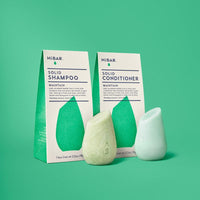

Let’s spill the shampoo tea. One look at shampoo ingredients and you’ll see a chemistry buffet.
You’re staring at sodium chloride, sodium lauryl sulfate, parabens, and a dozen other names that sound like they belong in a lab coat instead of on your scalp.
But what happens when table salt (yes, the same stuff on your fries) sneaks into your shampoo? Spoiler: it doesn’t exactly keep your hair healthy.
At HiBAR, we’re here to keep your hair care products fun, sustainable, and free of the harmful chemicals that can strip your strands of natural oils.
That’s why our shampoo bar collection is plastic-free, sulfate-free, sodium-chloride-free, and packed with plant-based goodness.
Want to explore clean beauty further? Explore our full hair care collection, learn about the ingredients to avoid in shampoo, and discover exactly what a shampoo bar is.
And if you’re serious about ditching the harsh stuff, our sulfate-free shampoo bar lineup is waiting to give your hair the glow-up it deserves.
TL;DR
- Sodium chloride = table salt, fine on fries but not in shampoo.
- It’s used as a cheap thickener in many shampoos, but it can strip your hair of natural oils.
- Side effects? Dryness, itchy scalp, breakage, and even hair loss.
- HiBAR bars skip the harmful chemicals like sodium chloride, sulfates, and parabens.
- Instead, we pack in plant-based ingredients and essential oils to keep all hair types healthy, shiny, and plastic-free.
What’s Sodium Chloride Doing in Your Shampoo – And Should You Kick It Out?
So why is this common ingredient in many shampoos and conditioners? Sodium chloride (a.k.a. common table salt) is used as a thickening agent to make liquid shampoo feel creamy and luxurious.
But, here’s the catch: high concentrations of salt can strip your hair of moisture, roughen up your hair cuticles, and even contribute to hair loss.
Sure, sodium chloride helps extend a shampoo’s shelf life and bulk up the formula. But over time, it can cause an itchy scalp, moisture loss, and hair breakage.
If you color your hair, the salt can weaken your hair shaft and fade dye faster than you can say, “touch-up appointment.”
Bottom line: you don’t need salt to get a good wash.
Bad Ingredients = Bad Hair Days (Coincidence? We Think Not)
Sodium chloride is just one bad actor. Shampoos and conditioners can also be filled with other harmful chemicals.
Sodium lauryl sulfate (SLS) and sodium laureth sulfate are foaming agents that can strip your scalp and skin of natural oils, leaving it dry, irritated, and prone to serious damage.
Then there are the extras: parabens (cheap preservatives linked to health and reproductive issues), propylene glycol (a moisture disruptor), synthetic fragrances (hello, irritation), and synthetic colors (a.k.a. cosmetic confetti).
Put them all together and you’ve got a cocktail that can wreck your scalp, weaken your hair’s natural keratin, and lead to split ends.
HiBAR bars skip the whole toxic circus. Instead of stripping, drying, or causing hair loss, we use plant-based ingredients like gentle cleansers, essential oils, and nourishing butters.
These protect your hair shaft and leave it looking like it just got a healthy-hair glow-up.
Shampoo Red Flags You Should Never Ignore
If your shampoo labels read like the back of a chemistry book, it’s time to raise an eyebrow. Here’s the A-list of villains:
- Sulfates (sodium lauryl sulfate, sodium laureth sulfate)
- Sodium Chloride (salt)
- Parabens
- Diethanolamine (DEA) & Triethanolamine (TEA)
- Drying Alcohols (like isopropyl alcohol)
- Formaldehyde & releasers
- Propylene Glycol
- Silicones
- Synthetic Fragrances
-
Synthetic Colors
And just to be clear: not all alcohols are bad. Fatty alcohols like cetearyl alcohol and stearyl alcohol actually lock in moisture.
But the drying ones? They’ll leave your hair brittle, frizzy, and begging for a deep treatment.
Don’t Get Fooled Again: How to Outsmart Sneaky Shampoo Labels
Here’s the thing about cosmetic products: the ingredient label can be tricky. Sodium chloride often shows up under its chemical name (salt), while other chemicals hide behind science-y jargon.
Pro tip: Opt for shampoos without sulfates, parabens, or sodium chloride if you want to avoid dryness, breakage, or hair loss.
Instead, look for active ingredients you actually want in your hair care products: essential oils, hydrating botanicals, and formulas designed to keep your hair hydrated and scalp balanced.
Meet HiBAR: The Plastic-Free Shampoo Bars Your Hair’s Been Waiting For
HiBAR creates cosmetic products that align with your values and hair goals.
Our shampoo bars are free from sodium chloride, sodium lauryl sulfate (SLS), parabens, and all the other nonsense that leaves your hair brittle and your scalp cranky.
Instead, we pack them with plant-based ingredients, essential oils, and nourishing blends that keep all hair types glossy, strong, and smooth.
Looking for specifics? Try our silicone-free shampoo for weightless shine, gluten-free shampoo if your scalp says “no thanks” to wheat, and non-comedogenic shampoo for acne-prone skin.
We’ve also got phthalate-free shampoo for ingredient purists, a zero-waste shampoo bar for eco-warriors, and both nourishing and hydrating shampoo bar options to keep your locks happy.
Bonus: they come in compostable packaging, so your cosmetics don’t have to come at the planet’s expense.
Want to nerd out more? Check out our guide to shampoo bar benefits and the scoop on silicone-free shampoo benefits.
HiBAR vs. Sodium Chloride: The Glow-Up Your Hair Deserves
Let’s be real: sodium chloride belongs on fries, not on your scalp. Sure, it helps cheap shampoos bulk up, but it also leaves your strands looking like they just survived a desert windstorm.
HiBAR shampoo bars don’t need salt to strut their stuff. They lather like a pro, cleanse gently, and serve up bounce, shine, softness, and strength, all without the harsh chemicals or plastic waste.
Imagine your hair walking into the room, flipping itself in slow-mo, and everyone whispering, “Wow, who’s that?” Yeah, that’s the HiBAR effect.
And because we know you’re also helping to glow up the planet, our bars are free of plastic, spills, and judgment.
They perform just like bottled shampoo, only with a fraction of the footprint. So you get to keep your bathroom chic and your conscience clear.
Ready for your upgrade? Pick your perfect bar and let the hair flips commence:
- For color-treated hair (keep those hues vibrant).
- For oily hair (shine in a good way, not the greasy way).
- For head acne (soothing without suffocating).
- For acne-prone skin (face and scalp deserve harmony).
- For dry hair (hydration station, this way).
- For non-comedogenic care (soft strands, clear pores, zero drama).
Bottom line? Sodium chloride can stick to the sides of the snack aisle. HiBAR is here to give your hair (and the planet) the glow-up it deserves.
How to Use HiBAR Shampoo Bars (and Why They’re Better Than Sodium Chloride Shampoos)
Using HiBAR’s bars is basically foolproof: wet your hair, swipe the bar onto your scalp, lather with your fingers, rinse. Done. No chemicals, no plastic, just hair care products that actually work.
Need a step-by-step? We’ve got you covered in our guide on how to use a shampoo bar.
Here’s why we’re better: liquid shampoos often use sodium chloride as a cheap thickener.
That’s great for the bottle, terrible for your scalp. Salt can dry out curls, rough up your hair shaft, and even encourage hair loss.
HiBAR bars, on the other hand, cleanse with plant-based ingredients like coconut-derived cleansers, which protect your natural keratin and keep strands hydrated.
Want to get even smarter with your routine? Learn how to wash oily hair, discover how to travel with shampoo bars, check how long shampoo bars last, and master how to store shampoo bars.
So, Is Sodium Chloride Bad for Hair? Here’s the Final Truth
Let’s call it: sodium chloride is fine on your fries, but in your hair products? Hard pass.
This cheap filler can dry your scalp, strip away natural oils, and leave your strands brittle, frizzy, and prone to breakage. If you stick with it long enough, you’re basically sending your hair an eviction notice.
HiBAR flips the script. Our bars skip the gimmicks and load up on plant-based ingredients that keep your scalp balanced, your hair hydrated, and your conscience plastic-free.
The result? Stronger, shinier strands that actually get healthier the more you wash.
So if you’ve been asking, “Is sodium chloride bad for hair?” the answer is a resounding yes. The better answer?
Ditch the salt, save your strands, and switch to HiBAR’s salon-quality shampoo bars today. Your hair will thank you every time you flip it.
Frequently Asked Questions (FAQs)
What is the number one shampoo ingredient that causes hair loss?
High concentrations of sodium chloride can dry out your scalp over time, weaken your hair shaft, and make strands more prone to shedding.
This salty buildup can leave your hair brittle and lifeless, devoid of moisture.
If your locks are thinning or breaking faster than you can say “bad hair day,” sodium chloride could potentially be the culprit.
Is sodium chloride the same as sulfates?
Nope. Sodium chloride is plain old salt, while sulfates (like sodium lauryl sulfate and sodium laureth sulfate) are harsh foaming detergents.
Different chemicals, but they both show up uninvited in your shampoo.
One roughs up your scalp and dries you out; the other strips your natural oils and can irritate sensitive skin. Either way, your hair deserves better.
Why is sodium chloride even in shampoo if it’s bad for hair?
It’s often used as a cheap thickening agent to extend shelf life. This is great for manufacturers but terrible for your mane.
While it gives liquid shampoos that gel-like consistency, the payoff for you is dryness, frizz, and breakage. Translation: your hair looks and feels like it paid the price for a corporate shortcut.
 sizes="(min-width: 1200px) 25vw, (min-width: 990px) 33vw, (min-width: 750px) 50vw, 100vw"
class="motion-reduce"
loading="lazy"
width="800"
height="800"
>
sizes="(min-width: 1200px) 25vw, (min-width: 990px) 33vw, (min-width: 750px) 50vw, 100vw"
class="motion-reduce"
loading="lazy"
width="800"
height="800"
>
 sizes="(min-width: 1200px) 25vw, (min-width: 990px) 33vw, (min-width: 750px) 50vw, 100vw"
class="motion-reduce"
loading="lazy"
width="800"
height="800"
>
sizes="(min-width: 1200px) 25vw, (min-width: 990px) 33vw, (min-width: 750px) 50vw, 100vw"
class="motion-reduce"
loading="lazy"
width="800"
height="800"
>
 sizes="(min-width: 1200px) 25vw, (min-width: 990px) 33vw, (min-width: 750px) 50vw, 100vw"
class="motion-reduce"
loading="lazy"
width="800"
height="800"
>
sizes="(min-width: 1200px) 25vw, (min-width: 990px) 33vw, (min-width: 750px) 50vw, 100vw"
class="motion-reduce"
loading="lazy"
width="800"
height="800"
>
 sizes="(min-width: 1200px) 25vw, (min-width: 990px) 33vw, (min-width: 750px) 50vw, 100vw"
class="motion-reduce"
loading="lazy"
width="800"
height="800"
>
sizes="(min-width: 1200px) 25vw, (min-width: 990px) 33vw, (min-width: 750px) 50vw, 100vw"
class="motion-reduce"
loading="lazy"
width="800"
height="800"
>